
‘Paranormal Adoption’ Has the Weirdest Adoption Trope
Good, bad, or mediocre, haunted doll films are terrific fun. I love the creepy doll aesthetic as well as the tropes of them being possessed/bizarre/scary. I generally enjoy every haunted doll film I see, but the genre is a mixed bag in terms of quality, even within franchises like Don Mancini’s CHILD’S PLAY.
For several years now, I’ve been on a mission to watch every single haunted doll film/show in existence. Here are some I’ve seen so far:
MAGIC
DOLLS
ROB1N
THE BOY II
M3GAN 1 & 2
The ANNABELLE trilogy
“Holly’s House” – MONSTERS
“Amelia” – TRILOGY OF TERROR
“Living Doll” – THE TWILIGHT ZONE
“Hell No, Dolly!” – LEGENDS OF TOMORROW
CHILD’S PLAY 1-3; BRIDE OF CHUCKY; CHUCKY (2021)
I could go on, but you get the idea. My interest in the haunted doll genre recently expanded in a way I never saw coming.
PARANORMAL ADOPTION (2012)
While searching for information about the film M3GAN (2022), I discovered the haunted doll film PARANORMAL ADOPTION (2012) from a TMZ article. The article reported that indie filmmaker and former airline pilot Carl Watts had sued Universal Pictures and Blumhouse Pictures for ripping off PARANORMAL ADOPTION when it made M3GAN. He wants the court to award him $5 million.
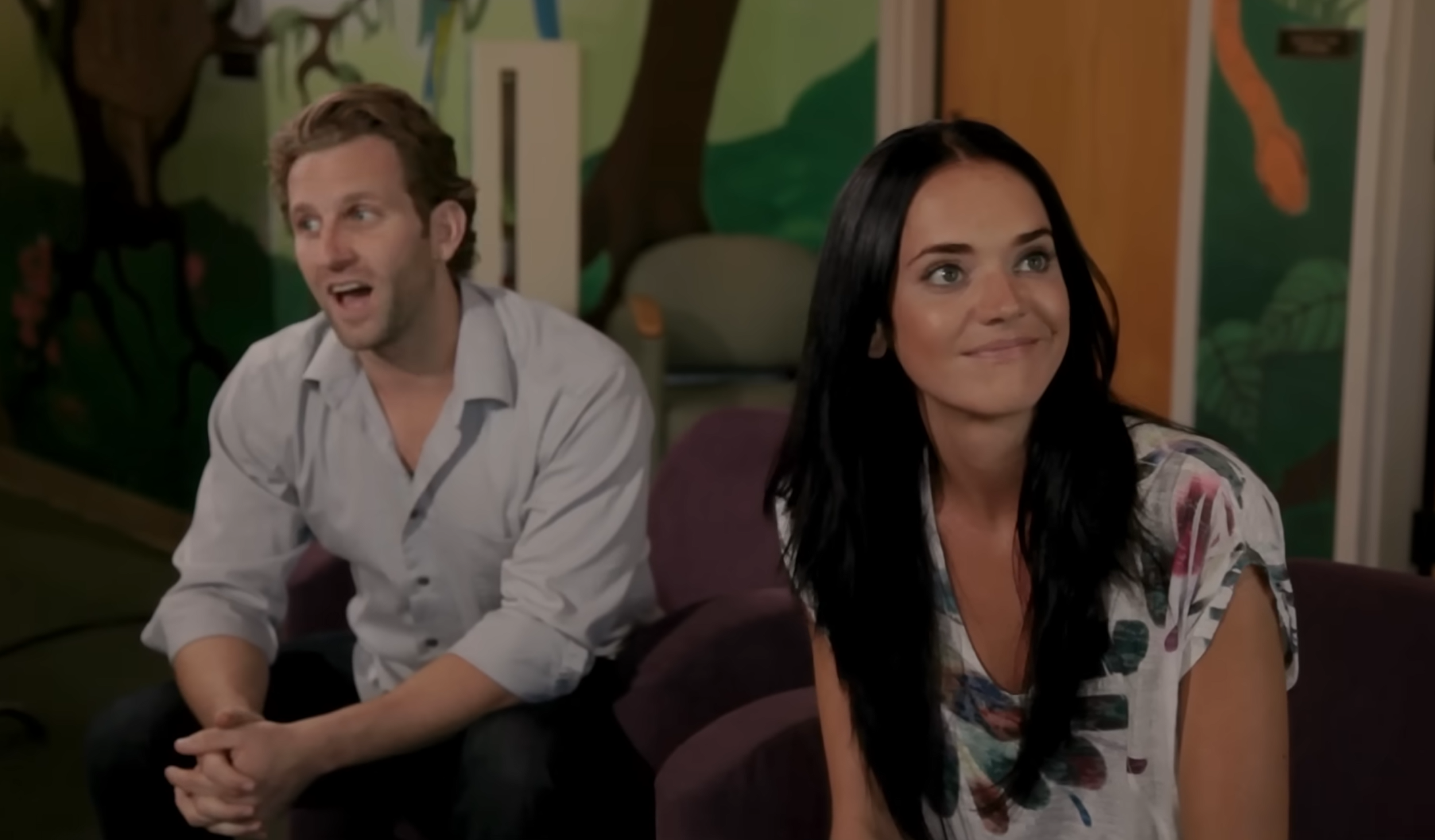
Sure, Carl.
The ridiculous title and goofball movie poster piqued my interest, especially because the poster includes a badly Photoshopped woman wearing a bikini and for some odd reason she’s smiling. I’m also a fan of so-bad-they’re-good movies and could tell PARANORMAL ADOPTION would fall into that category. I had to see this film! Lucky for me, it’s free on YouTube.
The film’s YouTube description:
A sexy Sci-Fi romantic film with a lot of unforeseen evil twists. A young couple looses [sic] their only child to a drowning in their swimming pool. They are devastated but eventually decide to adopt another girl to help them cope with their loss.The new daughter has some extraordinary behaviors that will add new light to the couples past and their future. Warning: Do not watch alone at night with the lights off.
I promptly watched PARANORMAL ADOPTION (during the day, and with a family member, but I can’t say I wasn’t tempted to disregard Carl’s warning). I didn’t expect quality from this film and yes, it’s substandard in every way you can imagine. If anything, I should think the rights-holders of THE TWILIGHT ZONE’s “Living Doll” and CHILD’S PLAY might want a word with Carl because if anyone blatantly referenced other horror doll movies, he did in PARANORMAL ADOPTION.
And wow, calling it a “sexy Sci-Fi Romantic film” is a choice. My background: I love sci-fi romance, I write sci-fi romance books, and blogged about it for eight years at The Galaxy Express. PARANORMAL ADOPTION is no sci-fi romantic film. Sure, the married couple, Lynn and Rich Thomas, get a bit handsy with each other, but that’s it. There are zero science fiction elements in this film. How did Carl forget that “paranormal” is literally in the title?
The IMDB description is better: “A couple loses their only child in an accident and subsequently unknowingly adopts an innocent looking little girl with paranormal powers that she uses to fulfill her twisted desires.”
Now that you know what PARANORMAL ADOPTION is about, let’s explore its depiction of adoption.
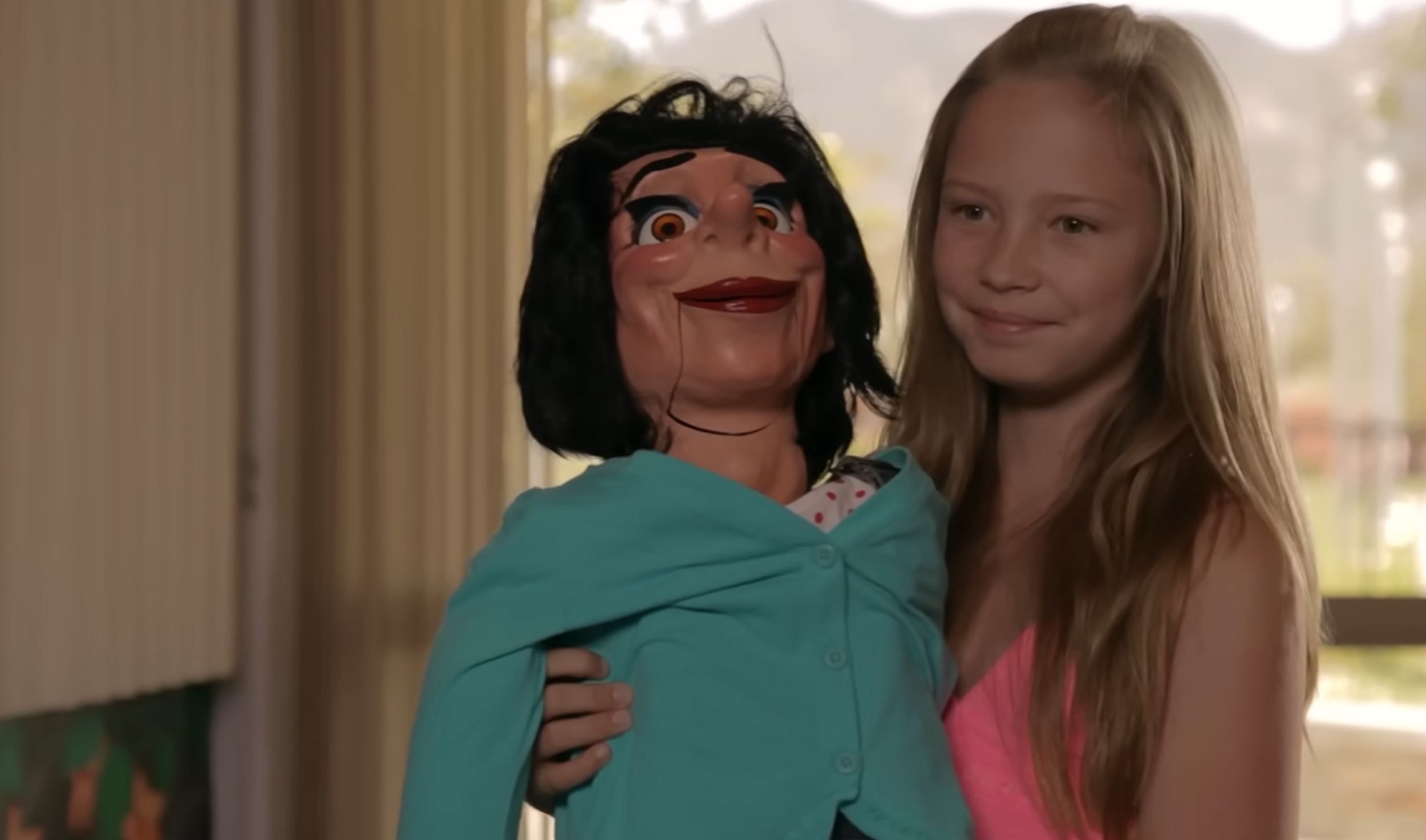
Miss Rachel and Lacy from Paranormal Adoption
“Miss Rachel is a real person”
Adoption stories in film and television are also a mixed bag in terms of accuracy and sensitivity to the subject matter. PARANORMAL ADOPTION isn’t one of the better ones, but all art is political, so this film still conveyed plenty about adoption both in its overt messaging and subtext. This post will be a quick hit about this topic rather than a deep dive.
The gist of the adoption angle in PARANORMAL ADOPTION is that Lynn and Rich want to adopt a baby, the adoption agency tells them newborns are scarce and would they be interested in adopting an eight-year-old white girl instead? (The fact that they were so pushy about offering an alternative child foreshadows a later plot point.) The catch is that this girl, Lacy, is obsessively attached to her doll, Miss Rachel, who inexplicably resembles a mature Jo Anne Worley. Horror hijinks ensue.
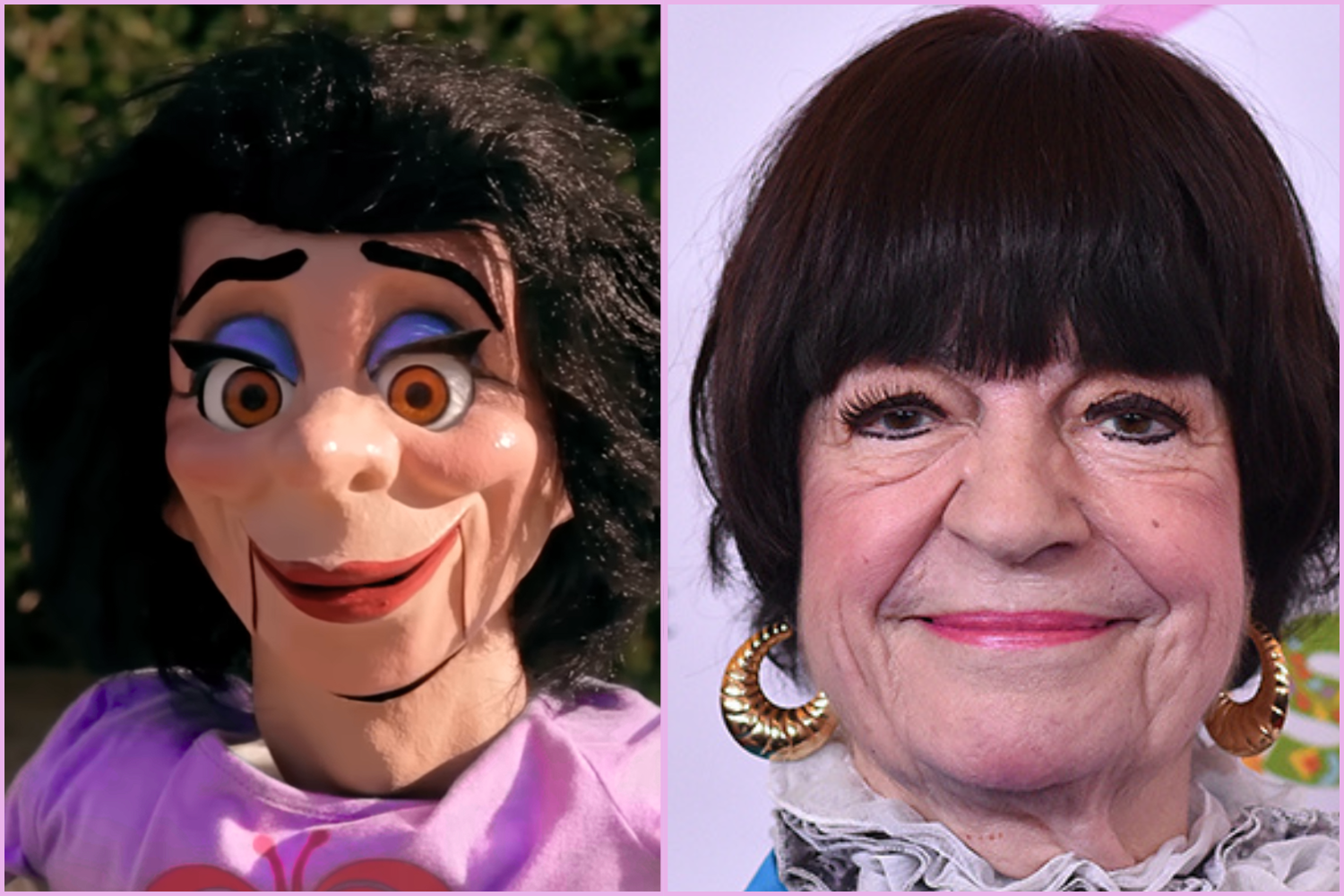
Left: Miss Rachel from the movie Paranormal Adoption. Right: actor Jo Anne Worley
PARANORMAL ADOPTION has a boatload of problems, but I’m only going to focus on the adoption part of the story. Here’s why: I’m an adoptee who was relinquished for adoption in 1969. My adoption was closed but decades later I reunited with my first mom. For more background, read my article in Severance Magazine: “A Tale of Two Adoptees.”
That’s the other reason PARANORMAL ADOPTION intrigued me. It’s probably the only movie with a title that combines my genre interest and part of my identity. What are the chances?! Plus, how often do filmmakers make a haunted doll movie featuring adoption? Well, besides M3GAN but we’ll circle back to that movie shortly.
Attack of the problematic adoption tropes
Based on PARANORMAL ADOPTION’s depiction of adoption, writer-director Carl Watts seemed to know little about how it works or he didn’t care to accurately depict it. Either way, one by-product of this movie is that it conveys adoption misinformation.
This film isn’t alone in that mistake. Filmmakers are smitten with adoption tropes, but it’s less clear how often adoptees are involved in TV/movie adoption stories (a “nothing about us without us” type of issue). PARANORMAL ADOPTION’s oddball, easy adoption process aside, what’s more alarming is that the story treats adoption as the most casual way to build a family—far too casual. This casual approach mirrors how many people view adoption in real life.
The Thomases lost their first biological child in a tragic accident. They’re unable to get pregnant again, so they turn to adoption (Replacement Goldfish trope). It’s no big deal; they’ll just go the adoption “store” and pick out a baby. Problem solved.
This movie also reinforces plenary adoption as morally good, necessary, and normal (not that I expected insightful social commentary from a film called PARANORMAL ADOPTION). This movie also dabbles in the Evil Orphan, Happily Adopted, and Un-Adopted tropes. It’s like Carl went to the adoption trope buffet and went wild.
Lacy is in foster care because her parents died. If PARANORMAL ADOPTION has one thing in common with M3GAN, it’s the fridging of the biological (birth) parents in service of the adoptive parents’ stories. One could argue that the Thomases’ deceased daughter was fridged as well in service of their grief and ongoing family-building efforts. Somehow, I doubt this similarity between the two films arose as a point of contention in Carl’s lawsuit.
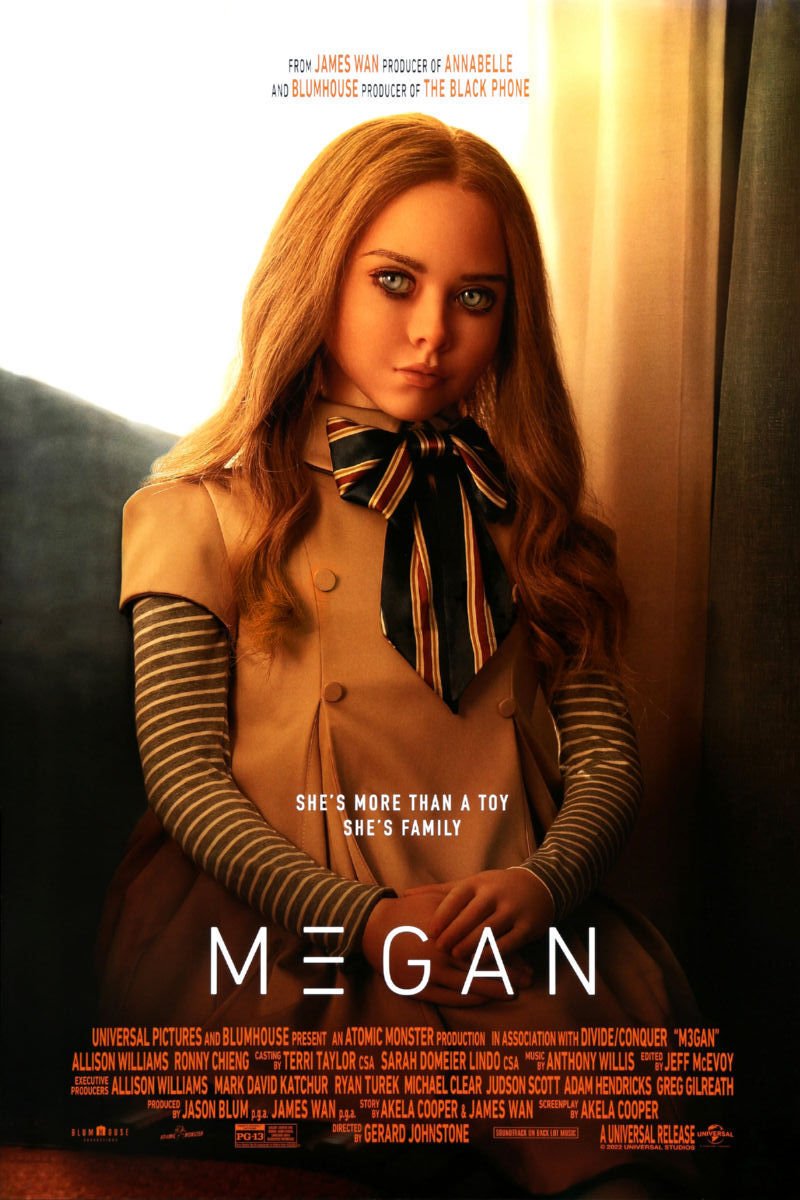
Promotional poster for the 2022 haunted doll film M3GAN
The adoption angle in M3GAN (kinship adoption) is different from the one in PARANORMAL ADOPTION (sorry, Carl, you’re not gonna win your lawsuit), but both movies reminded me of how birth mothers who relinquish their baby(ies) under duress for plenary adoption (or even open adoptions that don’t stay that way) are, in effect, fridged by the adoption industry, all in the service of adoptive parents who want to play savior and/or grow their families regardless of the harm it causes to first mothers and adoptees. First mothers are often shamed, shunned, and discarded—by their families, the adoption industry, and society at large. Then there’s the trauma of separation, often followed by lifelong grief that manifests in adoptees and first mothers in various ways.
Movies like M3GAN and PARANORMAL ADOPTION feature this kind of messaging/subtext, but not because their creators are ripping each other off. Rather, the filmmakers are steeped in the systemic stew of adoption propaganda we all swim in. They’re regurgitating—probably unknowingly—information fed to them by society/the for-profit adoption industry. At best, these depictions are rooted in ignorance; at worst, they’re irresponsible and harmful.
The PARANORMAL ADOPTION ending explained
Oddly enough—and I’m not sure quite what to make of it—there’s a kind of metaphorical plot twist in PARANORMAL ADOPTION (spoiler alert).
After Lacy kills her adoptive parents, she returns to the adoption agency. Surprise! Lacy is the only child available at this “agency” and her parents aren’t dead. It’s a family-owned business that profits not only from adoption, but also from the scheme of Lacy murdering the adoptive couples so her (biological!) parents can steal their money and stuff (however that’s supposed to happen, but this story isn’t concerned about plausibility). Honestly, I didn’t see that plot twist coming.
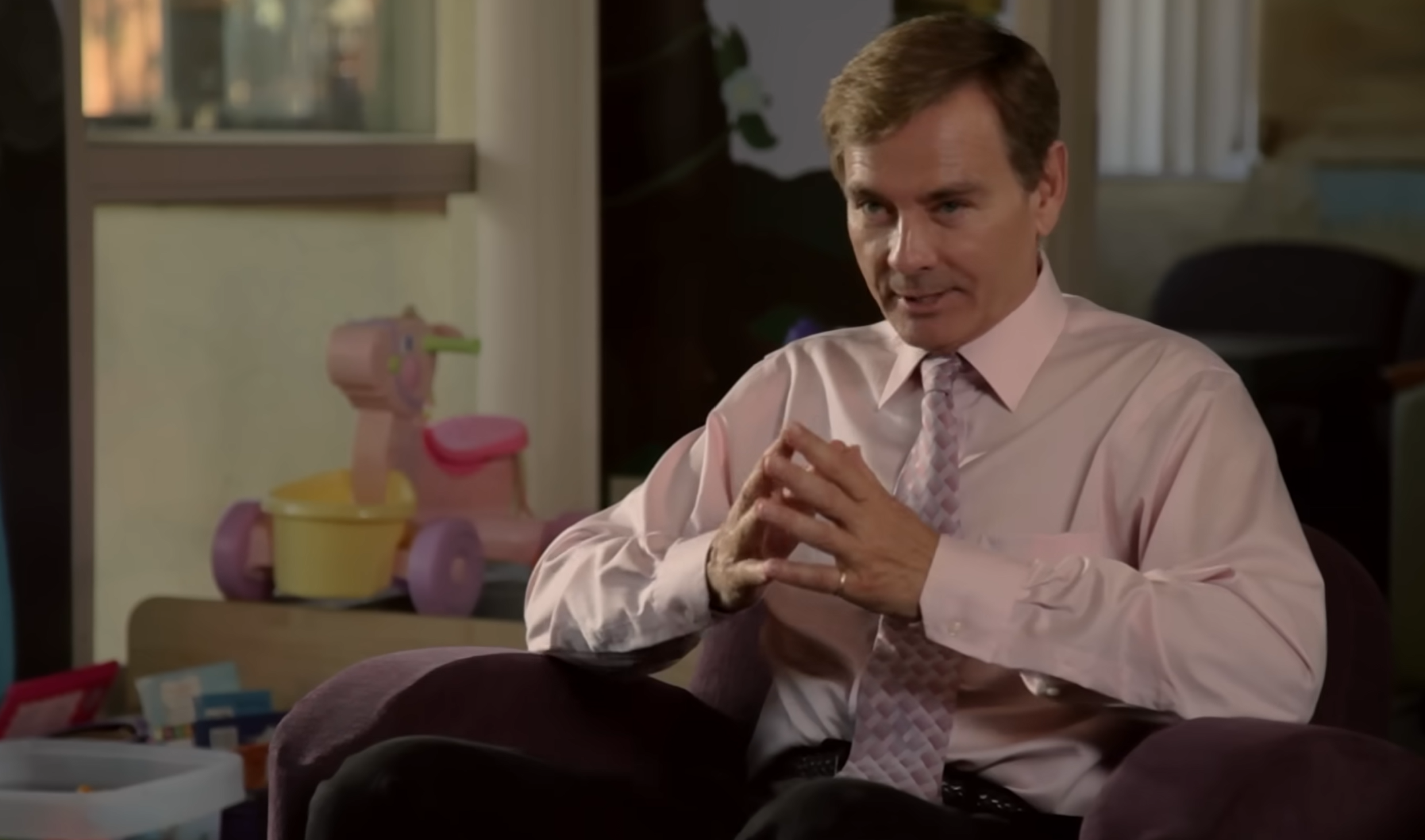
Dr. Camden, adoption agency director, from Paranormal Adoption
Is PARANORMAL ADOPTION a metaphor for the evils of the for-profit adoption industry?! Or is it a birth parent revenge fantasy masquerading as a haunted doll movie?!! Discuss.
It’s like the movie put a spin on the Sinister Serial Adopter trope. Instead of a villain adoptive parent using their adoptive kids for evil purposes, Lacy is a Sinister Serial Adoptee! I jest, but it really ain’t funny because this new trope that Carl Watts apparently invented demonizes adoptees and we’ve been demonized enough. It’s harmful to adoptees in real life when films and shows reinforce the stereotype of the “bad” or “ungrateful” adoptee.
Elementary school principal shenanigans
That’s all for the adoption analysis, but I have to highlight one other problem with PARANORMAL ADOPTION: the depiction of the movie’s elementary school principal. This twenty or thirty-something actor is clearly wearing a wig to appear like he’s in his fifties or sixties and failing miserably. The wig looks like one you’d see on a Golden Girls type lady who plays bridge every Sunday with her gal pals. I was legit shocked that a film in 2012 went so cheap and careless. Just…get a mature actor for the part?
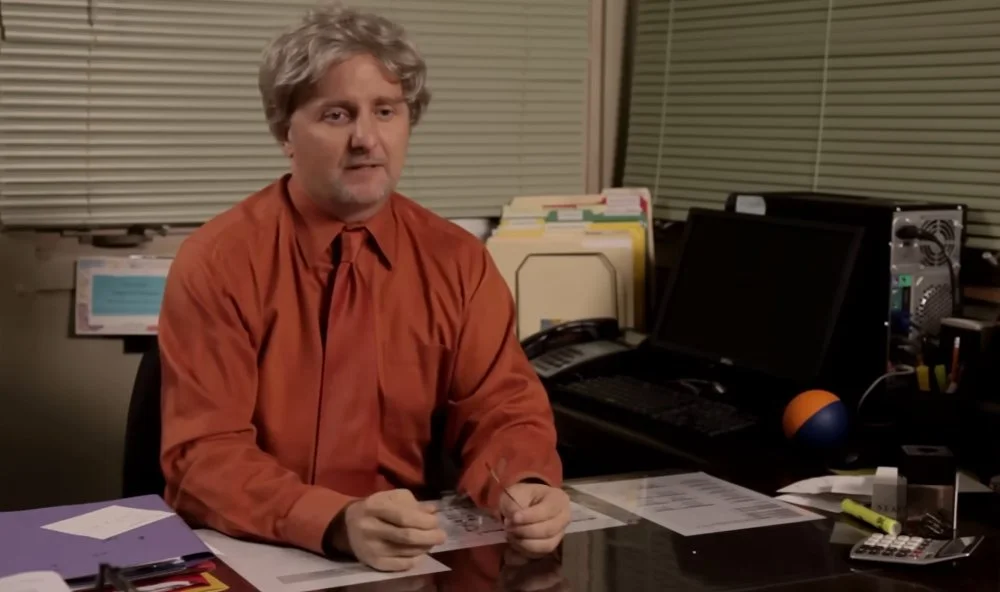
The elementary school principal from Paranormal Adoption
In conclusion, PARANORMAL ADOPTION 100% misses the mark on depicting adoption accurately or thoughtfully, but thankfully there are exceptions to this trend. If there’s one easy way we can help adoptees and birth parents, it’s to question the adoption tropes we encounter in stories. At the very least, we can ask who is being served by them.
Thanks for reading!
Related posts